
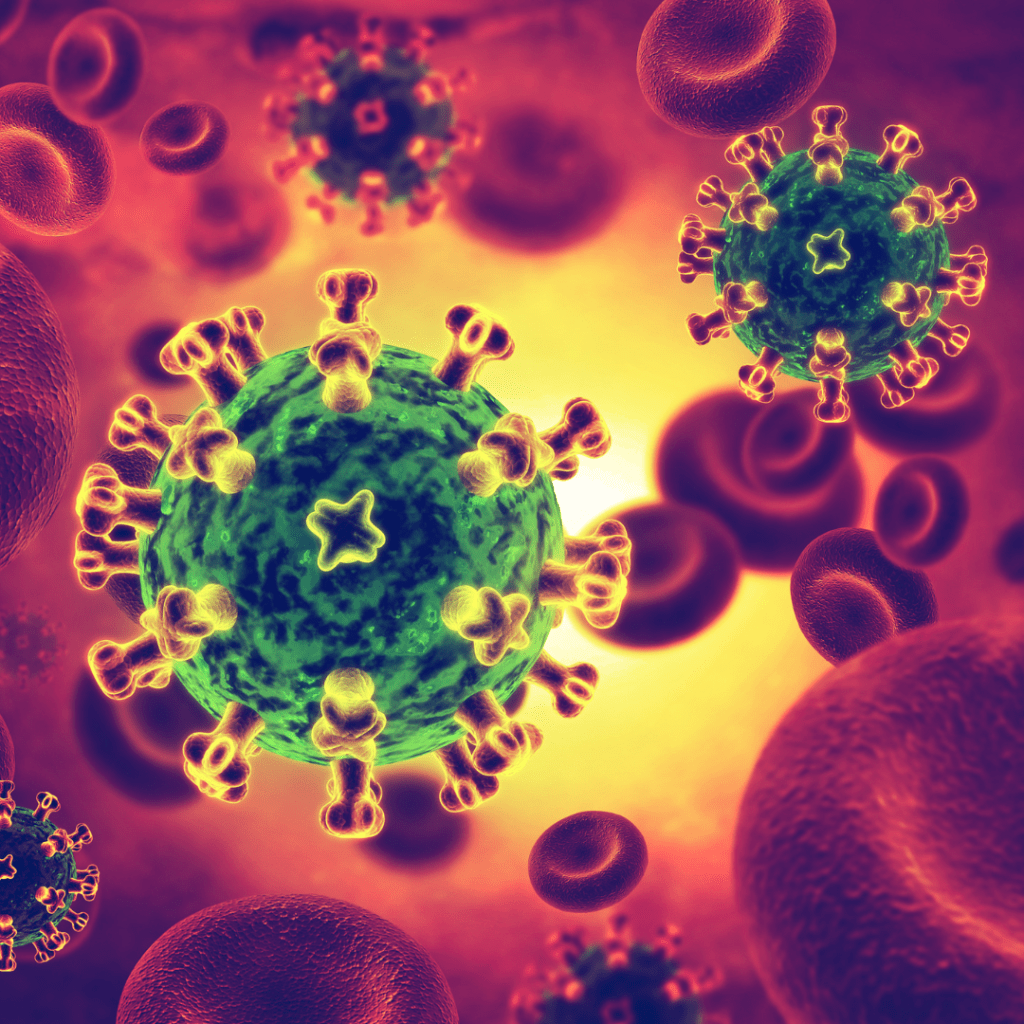
HIV (Human Immunodeficiency Virus) is a retrovirus that primarily targets the immune system’s CD4 T cells, as well as certain other immune cells like macrophages and dendritic cells. Understanding how HIV interacts with these cells is crucial for comprehending the virus’s mode of infection and the progression of HIV/AIDS.
- CD4 T cells (Helper T cells): HIV primarily targets CD4 T cells, which play a central role in coordinating the immune response. The process of HIV binding to and entering CD4 T cells involves several steps:a.
- Attachment: The viral envelope glycoprotein, specifically gp120, binds to the CD4 receptor on the surface of the CD4 T cell. This initial attachment is a reversible interaction.b.
- Co-receptor Binding: HIV requires a co-receptor, either CCR5 or CXCR4, to facilitate entry into the cell. After binding to CD4, gp120 undergoes a conformational change that allows it to bind to either CCR5 (found on most T cells) or CXCR4 (found on a subset of T cells). This binding stabilizes the interaction and triggers further changes in the viral envelope proteins.c.
- Fusion: The conformational changes induced by CD4 and co-receptor binding expose a hydrophobic region on the viral envelope glycoprotein gp41. This hydrophobic region inserts into the target cell’s plasma membrane, bringing the viral and cell membranes into close proximity and allowing them to fuse.d.
- Entry: The fusion of viral and cell membranes allows the viral capsid containing the viral RNA and enzymes to enter the CD4 T cell’s cytoplasm.
- Macrophages: Macrophages are immune cells involved in phagocytosis (engulfing foreign particles) and antigen presentation. HIV can infect macrophages through a similar process to CD4 T cells:a.
- Attachment: HIV’s gp120 binds to CD4 receptors on the surface of macrophages.b.
- Co-receptor Binding: As with CD4 T cells, the virus then binds to a co-receptor on the macrophage surface, usually CCR5.c.
- Fusion and Entry: The subsequent fusion of viral and cell membranes allows the viral contents to enter the macrophage’s cytoplasm.
- Dendritic Cells: Dendritic cells are specialized antigen-presenting cells that play a key role in initiating the adaptive immune response. HIV can interact with dendritic cells, potentially facilitating its spread to CD4 T cells:a.
- Attachment and Uptake: Dendritic cells can capture HIV virions through various mechanisms, such as capturing free virions in the extracellular fluid or capturing infected CD4 T cells through a process called trans-infection.b.
- Transport: Dendritic cells can migrate to lymph nodes, where they interact with CD4 T cells. During this process, captured virions can be transmitted to CD4 T cells, leading to infection.
It’s important to note that the interaction between HIV and these immune cells is complex and involves a series of molecular events. HIV’s ability to target and infect CD4 T cells, macrophages, and dendritic cells is a major factor contributing to the virus’s ability to evade the immune system and establish chronic infection.
Efforts to combat HIV/AIDS have focused on developing antiretroviral therapies that target various stages of the viral life cycle, including attachment, fusion, and reverse transcription, to prevent or slow down viral replication and disease progression.
 Sharetreck - Tracking Genomic Investments & clinical trials for HIV.