
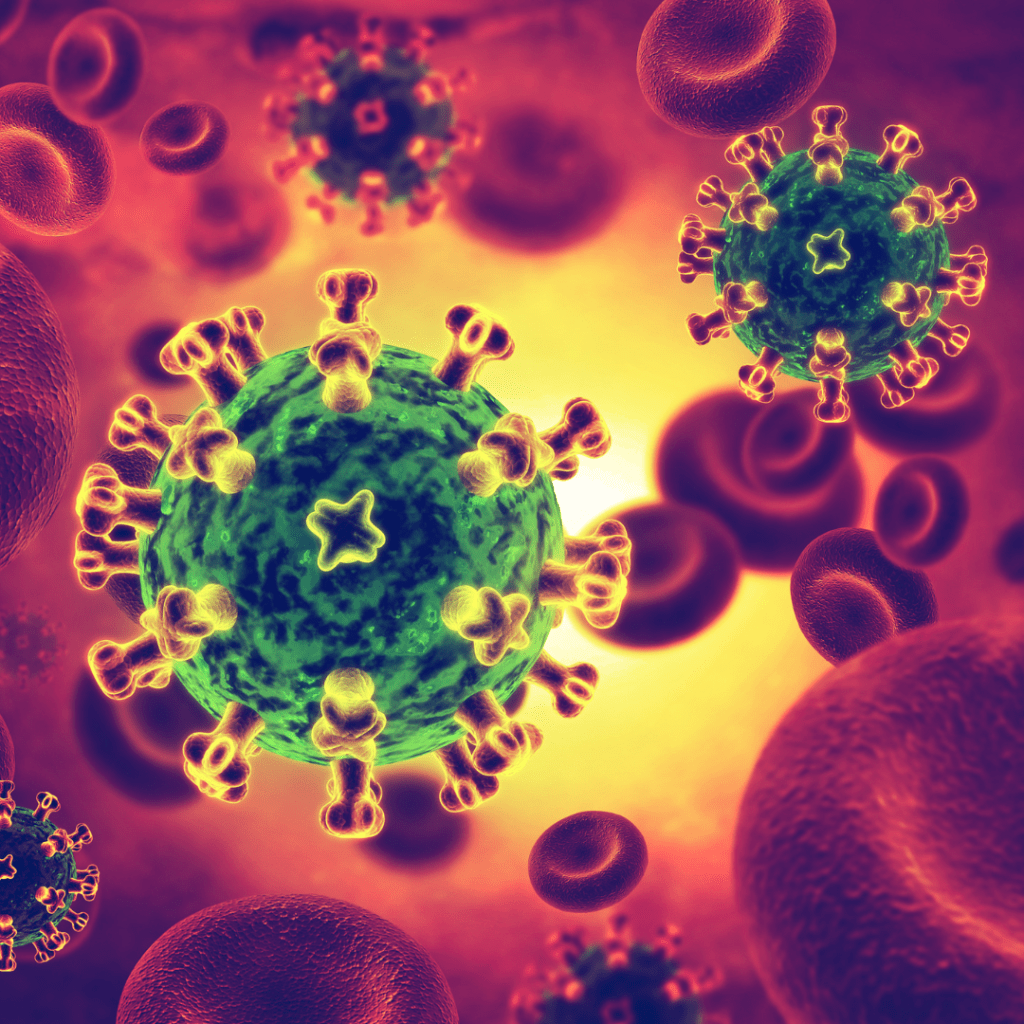
Introduction: HIV (Human Immunodeficiency Virus) is a notorious retrovirus that has puzzled researchers and clinicians for decades. One of the key mysteries lies in how this virus infiltrates our immune cells, ultimately leading to immune system breakdown and the development of AIDS (Acquired Immunodeficiency Syndrome). In this blog post, we’ll embark on a journey through the intricate steps HIV takes to enter immune cells, including CD4 T cells, macrophages, and dendritic cells.
HIV and Its Target Cells: HIV is a master infiltrator of the immune system, with a particular fondness for CD4 T cells (helper T cells), macrophages, and dendritic cells. These cells play vital roles in our immune defense mechanisms.
CD4 Receptors and Initial Attachment: At the outset, HIV’s outer envelope boasts glycoproteins called gp120 and gp41. The initial stage of infection hinges on the binding of gp120 to CD4 receptors on immune cells. Remarkably, CD4 receptors are not exclusive to one cell type; they are found on CD4 T cells, macrophages, and dendritic cells.
Co-receptor Binding: However, the viral rendezvous with CD4 receptors alone won’t grant it access to the host cell. HIV requires a co-receptor to unlock the cellular gateway. The co-receptor choice depends on the viral strain and infection stage. Macrophages stand out in expressing the CCR5 co-receptor, making them vulnerable to R5-tropic HIV strains, while CD4 T cells commonly express CXCR4, which is used by X4-tropic HIV strains.
Fusion of Viral Envelope: With the duo of CD4 and the appropriate co-receptor (like CCR5 for macrophages or CXCR4 for CD4 T cells) in its grasp, HIV triggers critical changes in its envelope proteins. This transformation reveals the gp41 protein, which acts as the key to unlock fusion between the viral envelope and the host cell’s membrane. This fusion event grants access to the virus’s genetic material and contents.
Reverse Transcription and Integration: Inside the host cell, HIV undergoes a radical makeover. Its RNA transforms into DNA, courtesy of reverse transcriptase. This newly synthesized viral DNA then integrates into the host cell’s genome, a process facilitated by integrase. Once integrated, the viral DNA becomes a permanent part of the host cell’s genetic makeup.
Replication and Spread: Integrated viral DNA can either stay dormant or become active, heralding the production of new viral particles. These offspring viruses proceed to infect other immune cells, including CD4 T cells, macrophages, and dendritic cells, perpetuating the infection. Over time, this ceaseless cycle of viral replication weakens the immune system, resulting in the immune deficiency characteristic of HIV/AIDS.
Infection of Macrophages: Macrophages, owing to their CD4 receptors and frequently expressed CCR5 co-receptor, are susceptible to infection by R5-tropic HIV strains. It’s worth noting that susceptibility varies among macrophages, influenced by factors such as viral strain and the host’s immune response.
Infection of CD4 T Cells: CD4 T cells, also expressing CD4 receptors and CXCR4 co-receptors, are primary targets for X4-tropic HIV strains. These strains utilize CXCR4 for entry into CD4 T cells. As with macrophages, the susceptibility of CD4 T cells can vary, and the co-receptor switch from CCR5 to CXCR4 is associated with disease progression.
Dendritic Cells and Co-receptor Expression: Dendritic cells, a distinctive branch of the immune system, also find themselves on HIV’s radar. These cells exhibit the capacity to express both CCR5 and CXCR4 co-receptors, with the extent of expression subject to various factors.
Variable Co-receptor Expression: Co-receptor expression on dendritic cells isn’t set in stone; it’s adaptable. Factors like the activation state of dendritic cells, their location within the body, and the presence of inflammatory signals can sway co-receptor expression. Some dendritic cells may simultaneously express both CCR5 and CXCR4 co-receptors, expanding their susceptibility to a wide range of HIV strains.
Dendritic Cells’ Role in HIV Transmission: Dendritic cells have a pivotal role in the transmission of HIV from mucosal surfaces to lymph nodes. They capture the virus at mucosal sites using specialized structures called dendrites. Afterward, dendritic cells transport the virus to lymph nodes, where they interact with CD4 T cells, facilitating the transfer of HIV to these target cells and instigating infection.
Conclusion: Understanding the intricate process of how HIV infiltrates immune cells is crucial for comprehending the virus’s transmission and its effects on the immune system
 Sharetreck - Tracking Genomic Investments & clinical trials for HIV.